

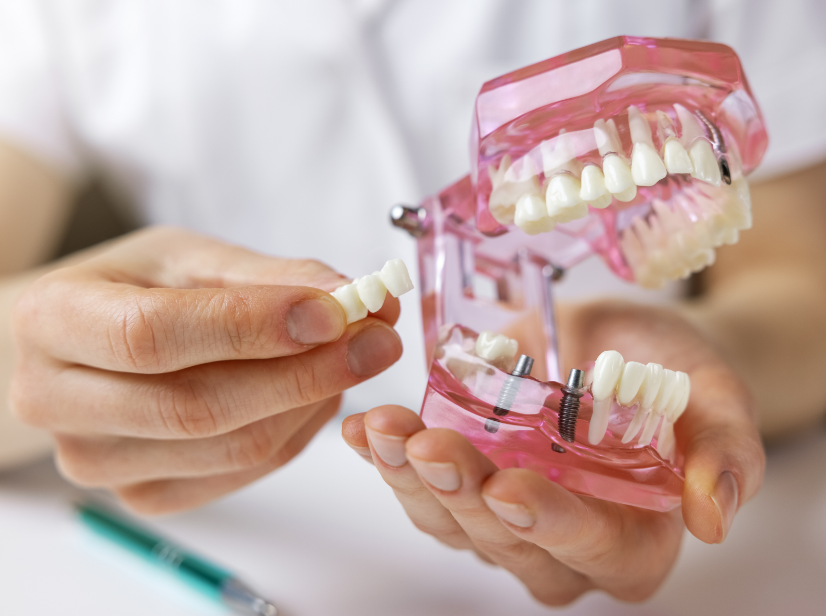
Missing multiple teeth can affect more than just your smile. Gaps in your teeth can make chewing uncomfortable, impact speech, and even cause surrounding teeth to shift out of place over time. The good news is that modern dentistry offers reliable solutions, including dental bridges and partial dentures. While both options restore function and appearance, they’re designed for different needs. Understanding how each works can help you feel more confident when discussing your options with your dentist.
What Is a Dental Bridge?
A dental bridge is a fixed restoration used to replace one or more missing teeth in a row. It “bridges” the gap by anchoring an artificial tooth, or teeth, to the natural teeth on either side. These neighboring teeth are typically reshaped to support dental crowns that hold the bridge securely in place.
Because bridges are fixed, they feel very natural and don’t move while eating or speaking. Many patients appreciate that a bridge blends seamlessly with their existing teeth and functions much like their original smile. Bridges are often recommended when the surrounding teeth are healthy enough to provide stable support.
What Is a Partial Denture?
A partial denture is a removable appliance designed to replace multiple missing teeth, often in different areas of the mouth. It typically consists of replacement teeth attached to a gum-colored base, sometimes supported by a lightweight metal or flexible framework.
Partial dentures are custom-made to fit comfortably and restore basic chewing and speaking abilities. Because they’re removable, they can be taken out for cleaning and at night, which some patients prefer. Partial dentures are often a good option when missing teeth are spread out or when neighboring teeth aren’t ideal candidates for crowns.
Key Differences Between Bridges and Partial Dentures
One of the biggest differences between these two options is permanence. Dental bridges are fixed in place and cannot be removed at home, while partial dentures are designed to be taken out daily. This affects how they feel, how they’re maintained, and how long they typically last.
Bridges tend to feel more like natural teeth and may offer greater stability. Partial dentures, however, are usually more affordable upfront and may require less preparation of existing teeth. The best choice depends on factors like oral health, bone support, budget, and personal preferences.
Which Option Is Right for You?
Choosing between a dental bridge and a partial denture isn’t a one-size-fits-all decision. Your dentist will evaluate the number and location of missing teeth, the condition of surrounding teeth, and your long-term oral health goals. Lifestyle considerations, such as how you feel about removable appliances, also play an important role.
Both options can significantly improve comfort, confidence, and overall oral function when properly fitted and maintained. Replacing missing teeth is an important step toward protecting your smile and restoring everyday comfort.
About the Practice
Dental Designs of Maryland provides comprehensive dental care focused on restoring function, comfort, and confidence for patients with missing teeth. Our experienced dental team offers personalized treatment plans that include restorative options such as dental bridges and partial dentures. With a commitment to patient education and long-term oral health, our doctors work closely with each patient to recommend solutions that support healthy, natural-looking smiles.
Call us at (410) 931-9400 or request an appointment online.